Buy ilqj.com ?
We are moving the project
ilqj.com .
Are you interested in purchasing the domain
ilqj.com ?
domain@kv-gmbh.de · 0541-91531010
Buy ilqj.com ?
Are there substances with a CO and NH2 group?
Yes, there are substances with a CO and NH2 group. One example is glycine, which is the simplest amino acid and has both a carboxyl group (COOH) and an amino group (NH2). Another example is urea, which has a carbonyl group (CO) and an amino group (NH2). These functional groups are important in biological molecules and have various roles in the body. **
How do I calculate the amount of NH2 in moles?
To calculate the amount of NH2 in moles, you need to know the mass of NH2 in grams and the molar mass of NH2. First, determine the mass of NH2 in grams using a balance or by looking it up in a chemical database. Then, divide the mass of NH2 in grams by the molar mass of NH2, which is approximately 16.02 g/mol. This will give you the amount of NH2 in moles. The formula for calculating moles is moles = mass (g) / molar mass (g/mol). **

Similar search terms for Nh2
Top-Angebote
Products related to Nh2:
-
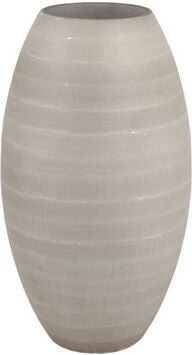
Sagebrook Home Glass Decorative Vase Modern Sleek Curved Silhouette Minimalist DesignAdd a touch of sophistication to any setting with this modern glass vase, designed to seamlessly blend form and function while elevating your space with effortless style.43,99 $*Shipping: 0,00 $Secure redirect to the provider
-
Sagebrook Home Stone Marble Bowl Sleek Sculptural Base and Modern Decorative Design"Bring timeless elegance and sculptural beauty into your home with this marble bowl, set on a bold base with a Natural Stone Finish. At 3"" high, it offers a compact yet impactful size that makes it both functional and decorative."62,15 $*Shipping: 0,00 $Secure redirect to the provider
-
Sagebrook Home "Metal Modern Glam Bowl Sleek Curved Design Stylish Sculptural Form - 20.0"""This modern glam metal bowl brings a sculptural touch to any tabletop decoration, this metal bowl comes in gold, ivory and tan providing thoughtful decorative use making it an effortless accent for a living room, kitchen, or dining room table.139,49 $*Shipping: 0,00 $Secure redirect to the provider



-
Is the NH2 atom partially negatively charged and the H atom partially positively charged?
Yes, the NH2 atom is partially negatively charged and the H atom is partially positively charged. This is due to the unequal sharing of electrons in the N-H bond. Nitrogen is more electronegative than hydrogen, so it attracts the shared electrons more strongly, leading to a partial negative charge on the nitrogen atom and a partial positive charge on the hydrogen atom. This partial charge distribution is what gives the NH2 molecule its polar nature. **
-
How can I determine which acid, NH2 or NH3, reacts with water to release H?
To determine which acid, NH2 or NH3, reacts with water to release H+, you can compare their acid dissociation constants (Ka). The higher the Ka value, the stronger the acid. NH3 has a Ka value of 5.6 x 10^-10, indicating that it is a weak base and does not readily release H+. On the other hand, NH2 (ammonium ion) has a Ka value of around 5.6 x 10^-10, indicating that it is a stronger acid and can readily release H+ in water. Therefore, NH2 is the species that reacts with water to release H+. **
-
Why does the substitution of Cl by NH2 on the pyrimidine occur through the same mechanism?
The substitution of Cl by NH2 on the pyrimidine occurs through the same mechanism because both the chlorine (Cl) and the amino group (NH2) are nucleophiles, meaning they both have a pair of electrons available for bonding. This allows them to undergo similar nucleophilic substitution reactions. Additionally, the pyrimidine ring structure provides a similar electronic environment for both substitutions, leading to the same mechanism for the substitution reaction. Therefore, the substitution of Cl by NH2 on the pyrimidine occurs through the same mechanism due to the similar reactivity of the nucleophiles and the electronic environment of the pyrimidine ring. **
-
Why do the side chains of lysine contain NH3 in some representations and NH2 in others?
The side chains of lysine contain NH3 in some representations and NH2 in others because lysine is a basic amino acid with a positively charged amino group at physiological pH. The NH3 representation reflects the protonated form of lysine, where the amino group has picked up a hydrogen ion and is positively charged. On the other hand, the NH2 representation reflects the unprotonated form of lysine, where the amino group is not carrying an extra hydrogen ion and is neutral. Both representations are valid and reflect different ionization states of lysine under different pH conditions. **


How do I know, with the acid NH2 NH3, which reacts with water and which H is released?
When NH2NH3 reacts with water, it undergoes hydrolysis to form NH4+ and OH-. In this reaction, one of the hydrogen atoms from NH2NH3 is released as a proton (H+), while the remaining hydrogen atoms combine with water to form NH4+ and OH-. Therefore, the H that is released is the one attached to the nitrogen atom in NH2NH3. **
What is the chemical structure of the amino acids with an amino group (NH2) and a amino group (NH3)?
The chemical structure of amino acids with an amino group (NH2) and a carboxyl group (NH3) is characterized by a central carbon atom (alpha carbon) bonded to a hydrogen atom, an amino group (NH2), a carboxyl group (COOH), and a side chain (R group). The amino group (NH2) consists of a nitrogen atom bonded to two hydrogen atoms, while the carboxyl group (COOH) consists of a carbon atom double-bonded to an oxygen atom and single-bonded to a hydroxyl group (OH). The side chain (R group) varies among different amino acids and determines their unique properties. **
Top-Angebote
Products related to Nh2:
-
StayWell Innovative Anti Fungal Laser Pen With Cutting Edge Fungal Infections Removal And Safe for Skin Technology Innovative Anti Fungal Laser Pen With Cutting Edge Fungal Infections Removal And Safe for Skin TechnologyDo you avoid going barefoot or wearing sandals because of your unsightly nails If so, our AntiFungal Laser Pen is the solution you've been looking for. Our laser pen combines the power of the infrared pulsed laser and blue light to exterminate...20,97 $*Shipping: 0,00 $Secure redirect to the provider
-
Sagebrook Home Glass Decorative Vase Modern Sleek Curved Silhouette Minimalist DesignAdd a touch of sophistication to any setting with this modern glass vase, designed to seamlessly blend form and function while elevating your space with effortless style.43,99 $*Shipping: 0,00 $Secure redirect to the provider
-
Sagebrook Home Stone Marble Bowl Sleek Sculptural Base and Modern Decorative Design"Bring timeless elegance and sculptural beauty into your home with this marble bowl, set on a bold base with a Natural Stone Finish. At 3"" high, it offers a compact yet impactful size that makes it both functional and decorative."62,15 $*Shipping: 0,00 $Secure redirect to the provider
-
Are there substances with a CO and NH2 group?
Yes, there are substances with a CO and NH2 group. One example is glycine, which is the simplest amino acid and has both a carboxyl group (COOH) and an amino group (NH2). Another example is urea, which has a carbonyl group (CO) and an amino group (NH2). These functional groups are important in biological molecules and have various roles in the body. **
-
How do I calculate the amount of NH2 in moles?
To calculate the amount of NH2 in moles, you need to know the mass of NH2 in grams and the molar mass of NH2. First, determine the mass of NH2 in grams using a balance or by looking it up in a chemical database. Then, divide the mass of NH2 in grams by the molar mass of NH2, which is approximately 16.02 g/mol. This will give you the amount of NH2 in moles. The formula for calculating moles is moles = mass (g) / molar mass (g/mol). **
-
Is the NH2 atom partially negatively charged and the H atom partially positively charged?
Yes, the NH2 atom is partially negatively charged and the H atom is partially positively charged. This is due to the unequal sharing of electrons in the N-H bond. Nitrogen is more electronegative than hydrogen, so it attracts the shared electrons more strongly, leading to a partial negative charge on the nitrogen atom and a partial positive charge on the hydrogen atom. This partial charge distribution is what gives the NH2 molecule its polar nature. **
-
How can I determine which acid, NH2 or NH3, reacts with water to release H?
To determine which acid, NH2 or NH3, reacts with water to release H+, you can compare their acid dissociation constants (Ka). The higher the Ka value, the stronger the acid. NH3 has a Ka value of 5.6 x 10^-10, indicating that it is a weak base and does not readily release H+. On the other hand, NH2 (ammonium ion) has a Ka value of around 5.6 x 10^-10, indicating that it is a stronger acid and can readily release H+ in water. Therefore, NH2 is the species that reacts with water to release H+. **
Similar search terms for Nh2
-
Sagebrook Home "Metal Modern Glam Bowl Sleek Curved Design Stylish Sculptural Form - 20.0"""This modern glam metal bowl brings a sculptural touch to any tabletop decoration, this metal bowl comes in gold, ivory and tan providing thoughtful decorative use making it an effortless accent for a living room, kitchen, or dining room table.139,49 $*Shipping: 0,00 $Secure redirect to the provider
-
GDFStudio - Emma Sleek Modern 4-Drawer Black Dresser with Handle-Free Design for Versatile StorageContemporary Minimalist Style: This 4-drawer dresser features a clean, handle-free design paired with a rich black finish that adds a sophisticated and streamlined look to any room.197,57 $*Shipping: 0,00 $Secure redirect to the provider
-
Why does the substitution of Cl by NH2 on the pyrimidine occur through the same mechanism?
The substitution of Cl by NH2 on the pyrimidine occurs through the same mechanism because both the chlorine (Cl) and the amino group (NH2) are nucleophiles, meaning they both have a pair of electrons available for bonding. This allows them to undergo similar nucleophilic substitution reactions. Additionally, the pyrimidine ring structure provides a similar electronic environment for both substitutions, leading to the same mechanism for the substitution reaction. Therefore, the substitution of Cl by NH2 on the pyrimidine occurs through the same mechanism due to the similar reactivity of the nucleophiles and the electronic environment of the pyrimidine ring. **
-
Why do the side chains of lysine contain NH3 in some representations and NH2 in others?
The side chains of lysine contain NH3 in some representations and NH2 in others because lysine is a basic amino acid with a positively charged amino group at physiological pH. The NH3 representation reflects the protonated form of lysine, where the amino group has picked up a hydrogen ion and is positively charged. On the other hand, the NH2 representation reflects the unprotonated form of lysine, where the amino group is not carrying an extra hydrogen ion and is neutral. Both representations are valid and reflect different ionization states of lysine under different pH conditions. **
-
How do I know, with the acid NH2 NH3, which reacts with water and which H is released?
When NH2NH3 reacts with water, it undergoes hydrolysis to form NH4+ and OH-. In this reaction, one of the hydrogen atoms from NH2NH3 is released as a proton (H+), while the remaining hydrogen atoms combine with water to form NH4+ and OH-. Therefore, the H that is released is the one attached to the nitrogen atom in NH2NH3. **
-
What is the chemical structure of the amino acids with an amino group (NH2) and a amino group (NH3)?
The chemical structure of amino acids with an amino group (NH2) and a carboxyl group (NH3) is characterized by a central carbon atom (alpha carbon) bonded to a hydrogen atom, an amino group (NH2), a carboxyl group (COOH), and a side chain (R group). The amino group (NH2) consists of a nitrogen atom bonded to two hydrogen atoms, while the carboxyl group (COOH) consists of a carbon atom double-bonded to an oxygen atom and single-bonded to a hydroxyl group (OH). The side chain (R group) varies among different amino acids and determines their unique properties. **
* All prices are inclusive of VAT and, if applicable, plus shipping costs. The offer information is based on the details provided by the respective shop and is updated through automated processes. Real-time updates do not occur, so deviations can occur in individual cases. ** Note: Parts of this content were created by AI.