Buy ilqj.com ?
We are moving the project
ilqj.com .
Are you interested in purchasing the domain
ilqj.com ?
domain@kv-gmbh.de · 0541-91531010
Buy ilqj.com ?
Is cos(2x) the same as cos(x^2)?
No, cos(2x) is not the same as cos(x^2). The function cos(2x) represents the cosine of twice the angle x, while cos(x^2) represents the cosine of the square of x. These are two different functions with different inputs and outputs. **
How can one reverse the equation cos(x) * cos(2x) = 0?
To reverse the equation cos(x) * cos(2x) = 0, we need to find the values of x that make either cos(x) or cos(2x) equal to zero. This can be achieved by setting each factor equal to zero separately and solving for x. For cos(x) = 0, x can be π/2 + nπ, where n is an integer. For cos(2x) = 0, x can be π/4 + nπ/2, where n is an integer. By finding the values of x that satisfy either of these conditions, we can reverse the equation cos(x) * cos(2x) = 0. **


Similar search terms for Cos
Top-Angebote
Products related to Cos:
-
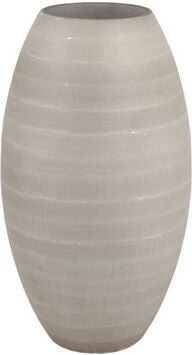
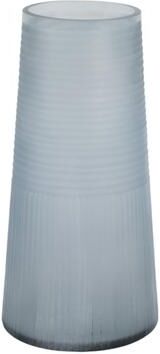
Sagebrook Home Stone Marble Bowl Sleek Sculptural Base and Modern Decorative Design"Bring timeless elegance and sculptural beauty into your home with this marble bowl, set on a bold base with a Natural Stone Finish. At 3"" high, it offers a compact yet impactful size that makes it both functional and decorative."59,19 $*Shipping: 0,00 $Secure redirect to the provider
-
Sagebrook Home "Metal Modern Glam Bowl Sleek Curved Design Stylish Sculptural Form - 20.0"""This modern glam metal bowl brings a sculptural touch to any tabletop decoration, this metal bowl comes in gold, ivory and tan providing thoughtful decorative use making it an effortless accent for a living room, kitchen, or dining room table.119,26 $*Shipping: 0,00 $Secure redirect to the provider


-
Why is cos(120) equal to cos(60)? Please help me.
The reason why cos(120) is equal to cos(60) is because the cosine function has a period of 360 degrees. This means that the cosine values repeat every 360 degrees. Since 120 degrees is 60 degrees past 60 degrees, the cosine values at these angles are equal. In other words, the cosine function is symmetric about the y-axis, so the cosine value at an angle and its supplementary angle (180 degrees minus the angle) are equal. Therefore, cos(120) = cos(60). **
-
What are the roots of the function f(x) = cos(x) * cos(2x)?
The roots of the function f(x) = cos(x) * cos(2x) occur when the function equals zero. To find the roots, we set the function equal to zero and solve for x. The roots of this function occur at x = 0, x = π/3, and x = -π/3. These are the values of x for which the function f(x) equals zero. **
-
What is SIN COS and TAN?
SIN, COS, and TAN are trigonometric functions used in mathematics to relate the angles of a right triangle to the lengths of its sides. - Sine (SIN) is the ratio of the length of the side opposite an angle to the length of the hypotenuse. - Cosine (COS) is the ratio of the length of the side adjacent to an angle to the length of the hypotenuse. - Tangent (TAN) is the ratio of the length of the side opposite an angle to the length of the side adjacent to the angle. These functions are fundamental in trigonometry and are used to solve various problems involving angles and sides of triangles. **
-
For which angles does cos(0) apply?
The cosine function, cos(θ), applies for all angles. However, specifically for the angle of 0 degrees, the cosine function evaluates to 1. This is because the cosine of 0 degrees is the ratio of the adjacent side to the hypotenuse in a right triangle, and when the angle is 0 degrees, the adjacent side is equal to the hypotenuse, resulting in a cosine value of 1. **


What does an exponent behind cos mean?
An exponent behind cos represents the cosine function raised to a certain power. This means that the cosine function is being multiplied by itself the number of times indicated by the exponent. For example, cos^2(x) means cosine squared, which is equivalent to (cos(x))^2. The exponent behind cos is used to indicate repeated multiplication of the cosine function. **
How do I calculate cos(x^0.5)?
To calculate cos(x^0.5), you first need to find the value of x^0.5 (the square root of x). Once you have the value of x^0.5, you can then use a calculator or a trigonometric table to find the cosine of that value. Alternatively, you can use a scientific calculator that has a square root function and a cosine function to directly calculate cos(x^0.5). **
Top-Angebote
Products related to Cos:
-
Veronese Design 13.58 in H Hippocrates of Cos Holding Hippocratic Oath Poly ResinVeronese Design honors the father of medicine with this magnificent Hippocrates statue, depicting the ancient Greek physician holding the legendary Hippocratic Oath scroll that has guided medical ethics for millennia.72,99 $*Shipping: 0,00 $Secure redirect to the provider
-
StayWell Innovative Anti Fungal Laser Pen With Cutting Edge Fungal Infections Removal And Safe for Skin Technology Innovative Anti Fungal Laser Pen With Cutting Edge Fungal Infections Removal And Safe for Skin TechnologyDo you avoid going barefoot or wearing sandals because of your unsightly nails If so, our AntiFungal Laser Pen is the solution you've been looking for. Our laser pen combines the power of the infrared pulsed laser and blue light to exterminate...20,97 $*Shipping: 0,00 $Secure redirect to the provider
-
Sagebrook Home Stone Marble Bowl Sleek Sculptural Base and Modern Decorative Design"Bring timeless elegance and sculptural beauty into your home with this marble bowl, set on a bold base with a Natural Stone Finish. At 3"" high, it offers a compact yet impactful size that makes it both functional and decorative."59,19 $*Shipping: 0,00 $Secure redirect to the provider
-
Is cos(2x) the same as cos(x^2)?
No, cos(2x) is not the same as cos(x^2). The function cos(2x) represents the cosine of twice the angle x, while cos(x^2) represents the cosine of the square of x. These are two different functions with different inputs and outputs. **
-
How can one reverse the equation cos(x) * cos(2x) = 0?
To reverse the equation cos(x) * cos(2x) = 0, we need to find the values of x that make either cos(x) or cos(2x) equal to zero. This can be achieved by setting each factor equal to zero separately and solving for x. For cos(x) = 0, x can be π/2 + nπ, where n is an integer. For cos(2x) = 0, x can be π/4 + nπ/2, where n is an integer. By finding the values of x that satisfy either of these conditions, we can reverse the equation cos(x) * cos(2x) = 0. **
-
Why is cos(120) equal to cos(60)? Please help me.
The reason why cos(120) is equal to cos(60) is because the cosine function has a period of 360 degrees. This means that the cosine values repeat every 360 degrees. Since 120 degrees is 60 degrees past 60 degrees, the cosine values at these angles are equal. In other words, the cosine function is symmetric about the y-axis, so the cosine value at an angle and its supplementary angle (180 degrees minus the angle) are equal. Therefore, cos(120) = cos(60). **
-
What are the roots of the function f(x) = cos(x) * cos(2x)?
The roots of the function f(x) = cos(x) * cos(2x) occur when the function equals zero. To find the roots, we set the function equal to zero and solve for x. The roots of this function occur at x = 0, x = π/3, and x = -π/3. These are the values of x for which the function f(x) equals zero. **
Similar search terms for Cos
-
Sagebrook Home "Metal Modern Glam Bowl Sleek Curved Design Stylish Sculptural Form - 20.0"""This modern glam metal bowl brings a sculptural touch to any tabletop decoration, this metal bowl comes in gold, ivory and tan providing thoughtful decorative use making it an effortless accent for a living room, kitchen, or dining room table.119,26 $*Shipping: 0,00 $Secure redirect to the provider
-
Garvee Wooden Play Kitchen for Kids - Innovative Corner Design, Realistic Cooking Sounds - 33.4*351. [Innovative Design]: The Innovative Corner Play Kitchen provides a comprehensive and immersive play experience with realistic features like a microwave, oven, cordless phone, and real chalkboard.133,49 $*Shipping: 0,00 $Secure redirect to the provider
-
GDFStudio - Emma Sleek Modern 4-Drawer Black Dresser with Handle-Free Design for Versatile StorageContemporary Minimalist Style: This 4-drawer dresser features a clean, handle-free design paired with a rich black finish that adds a sophisticated and streamlined look to any room.202,99 $*Shipping: 0,00 $Secure redirect to the provider
-
What is SIN COS and TAN?
SIN, COS, and TAN are trigonometric functions used in mathematics to relate the angles of a right triangle to the lengths of its sides. - Sine (SIN) is the ratio of the length of the side opposite an angle to the length of the hypotenuse. - Cosine (COS) is the ratio of the length of the side adjacent to an angle to the length of the hypotenuse. - Tangent (TAN) is the ratio of the length of the side opposite an angle to the length of the side adjacent to the angle. These functions are fundamental in trigonometry and are used to solve various problems involving angles and sides of triangles. **
-
For which angles does cos(0) apply?
The cosine function, cos(θ), applies for all angles. However, specifically for the angle of 0 degrees, the cosine function evaluates to 1. This is because the cosine of 0 degrees is the ratio of the adjacent side to the hypotenuse in a right triangle, and when the angle is 0 degrees, the adjacent side is equal to the hypotenuse, resulting in a cosine value of 1. **
-
What does an exponent behind cos mean?
An exponent behind cos represents the cosine function raised to a certain power. This means that the cosine function is being multiplied by itself the number of times indicated by the exponent. For example, cos^2(x) means cosine squared, which is equivalent to (cos(x))^2. The exponent behind cos is used to indicate repeated multiplication of the cosine function. **
-
How do I calculate cos(x^0.5)?
To calculate cos(x^0.5), you first need to find the value of x^0.5 (the square root of x). Once you have the value of x^0.5, you can then use a calculator or a trigonometric table to find the cosine of that value. Alternatively, you can use a scientific calculator that has a square root function and a cosine function to directly calculate cos(x^0.5). **
* All prices are inclusive of VAT and, if applicable, plus shipping costs. The offer information is based on the details provided by the respective shop and is updated through automated processes. Real-time updates do not occur, so deviations can occur in individual cases. ** Note: Parts of this content were created by AI.